Kalmár
Csongor és TündeKalmár, the Merchant, is one of the three worldly travelers who cross Csongor’s path, and the first to give wealth a voice as a definite answer to human need. His confident rule—that money must be earned through work—stands in sharp contrast to his later, faltering appearance: supported by a crutch, he searches for the treasures he has lost. The movement from command to lament makes him a compact portrait of material ambition confronted by impermanence.
Identity and Introduction
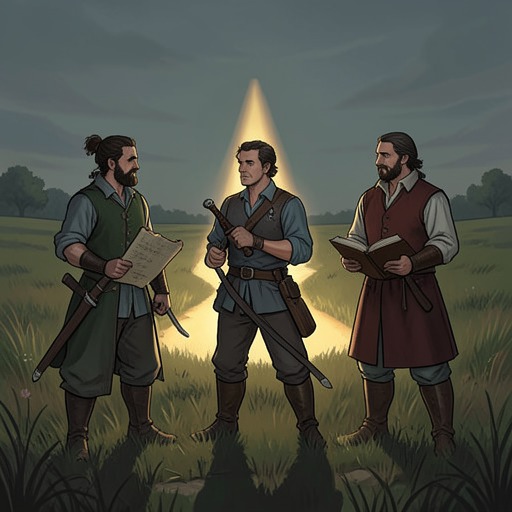
Kalmár is identified among the play’s wandering figures, alongside the Fejedelem and the Tudós. They are introduced in relation to Csongor, the young hero, as travelers whose distinct pursuits give form to different worldly answers to the search for happiness. Kalmár’s defining concern is money and accumulated wealth; his speech treats economic effort not as an incidental activity but as the route by which a person may obtain what he wants.
His entrance is staged as part of Csongor’s encounter with passing faces. Csongor wonders what kinds of travelers are appearing before him, and Kalmár comes forward to answer that question in person. The encounter therefore makes him both an individual speaker and one member of a broader procession: the travelers embody competing pursuits that Csongor can observe without adopting as his own.
Labor and the Promise of Wealth
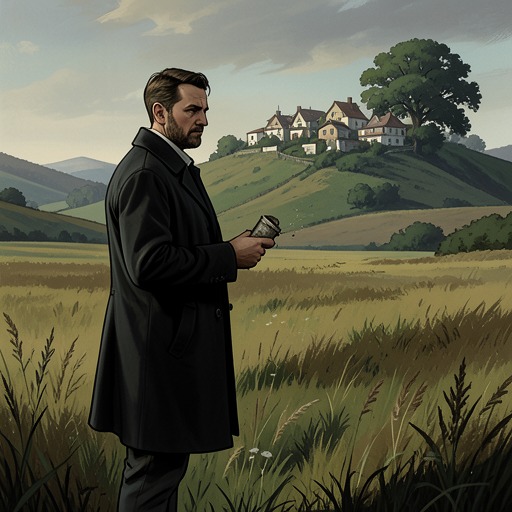
Kalmár states his principle in blunt, practical terms: if money is wanted, one should sweat and pursue it, and it will be gained. He adds that he gives from his own resources only to someone who works. The claim binds wealth to labor and makes self-reliance the stated condition of assistance. Rather than offer Csongor consolation or an account of love, Kalmár proposes effort directed toward acquisition as a sufficient response to need.
The certainty of this advice is part of its dramatic force. Kalmár speaks as someone who possesses money and can make it the measure of a practical philosophy. Yet the play later returns to him in circumstances that unsettle the authority of that philosophy: the man who has made wealth the object of pursuit can no longer command it to remain. His earlier confidence and later loss are not separate character sketches but opposite moments in the same material promise.
Loss and Reversal
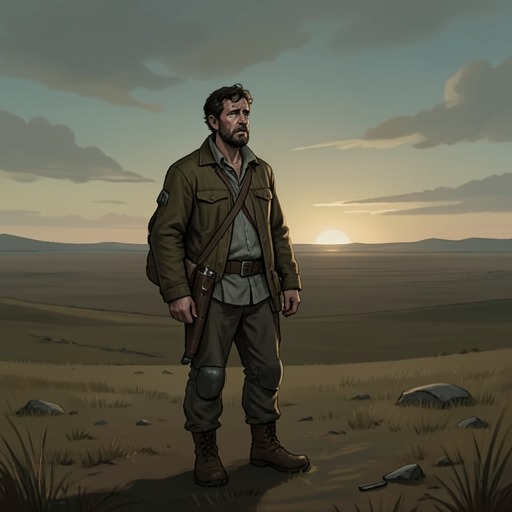
When Kalmár appears again, he is leaning heavily on a crutch and describes himself as having tired, weak legs. The physical detail makes his decline visible before his lament explains it. He says that the ugly mark of poverty now shows the spots left by his worn-away brightness. His image turns former splendor into a surface on which deprivation has become legible: what once shone has faded, and poverty now displays the damage.
He then calls out for his accumulated treasures, asking where they are. The loss is sharpened by the contrast between the past he remembers and the present in which he must search. He recalls his tree of hope blossoming richly, its golden flowers scattered by a storm. The image does not describe a gradual reduction alone; it presents prosperity as a flourishing that can be broken apart and dispersed. His former riches had been an expectation of continuing abundance, but the storm has left him with the memory of what was gathered and the spectacle of its disappearance.
The scene reverses the terms of his earlier advice. Kalmár had declared that money would follow those willing to work for it, and that he would reserve help for the industrious. Now his own condition is marked by poverty and physical weakness, and his speech turns not to a new plan for earning wealth but to a call for what has gone. The contrast does not establish why his fortune disappeared or whether he could recover it; it does show that labor and possession have not secured him against loss.
Relationships and Narrative Role
Kalmár’s defining encounter is with Csongor, to whom he offers his work-centered view of money. Their exchange places a worldly prescription before a young hero who is engaged in a different search. Kalmár’s counsel is concrete and transactional: effort produces money, while aid is conditional on work. The scene lets Csongor hear the promise directly from its advocate, rather than receive it as an abstract maxim.
As one of three travelers, Kalmár also helps structure the play’s examination of worldly pursuits. His sphere is material acquisition, and his later reappearance tests the endurance of the success it offers. The crutch, the poverty made visible on his diminished appearance, and the absent treasures answer his earlier assurance without erasing it: he really did speak from a position of possession, but possession proved vulnerable. His arc gives the pursuit of wealth both its persuasive voice and its image of reversal.
Kalmár’s ending, as represented in these scenes, is not a stated recovery or a new resolution. He is left lamenting what has vanished. That unresolved contrast—between the man who tells others to pursue money and the impoverished traveler who asks where his own riches have gone—makes his brief role a pointed measure of the instability of material fortune.